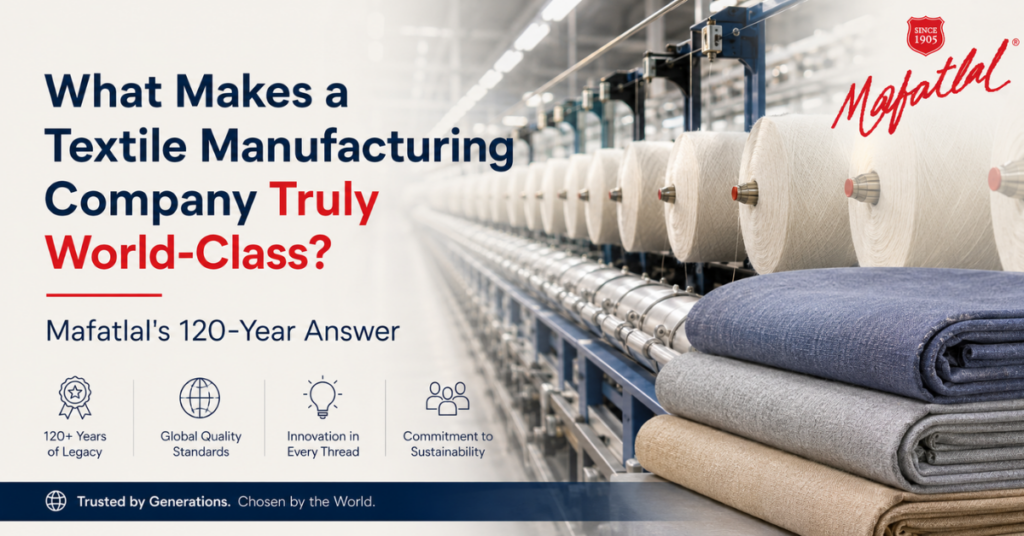
In an increasingly competitive global market, becoming a world-class textile manufacturing company requires much more than producing quality fabrics. It demands a combination of innovation, operational excellence, sustainability, customer trust, and a commitment to continuous improvement. For over 120 years, Mafatlal Industries Limited has demonstrated what it takes to thrive in the textile industry while maintaining a legacy of quality and reliability.
As a leading textile company in India, Mafatlal’s journey offers valuable insights into the characteristics that define a truly world-class textile manufacturer.
A Legacy Built on Trust and Excellence
One of the key factors that distinguishes a world-class textile manufacturing company is its ability to maintain consistent quality over decades. Established more than a century ago, Mafatlal Industries Limited has earned the trust of customers through its dedication to high manufacturing standards and innovative textile solutions.
Longevity in the textile industry is not achieved by chance. It is the result of strong leadership, customer-centric practices, and the ability to adapt to changing market demands. This commitment has helped Mafatlal remain a respected name among businesses seeking a leading textile company in India.
The Importance of an Integrated Textile Manufacturing Process
A world-class textile manufacturer understands the value of controlling quality at every stage of production. An integrated textile manufacturing process enables companies to manage everything from raw material sourcing to fabric finishing under one operational framework.
By implementing an integrated textile manufacturing process, manufacturers can ensure better quality control, faster production cycles, and greater consistency across product lines. This approach also improves efficiency and helps meet the diverse requirements of customers across industries.
For companies looking for reliability and scalability, manufacturers that invest in an integrated textile manufacturing process often provide a significant competitive advantage.
Advanced Infrastructure and Fabric Manufacturing Capabilities
Modern infrastructure is another hallmark of a successful textile manufacturing company. Advanced machinery, automation, and skilled professionals contribute to the production of high-quality fabrics that meet global standards.
A well-equipped fabric manufacturing unit India can efficiently handle large-scale production while maintaining stringent quality benchmarks. Businesses sourcing textiles often prioritize manufacturers with modern facilities because they offer greater consistency and production flexibility.
As a recognized industry player, Mafatlal Industries Limited has continuously invested in technology and manufacturing excellence, strengthening its position among the most respected textile organizations in the country.
Sustainability as a Core Business Principle
Today’s customers and global brands increasingly expect manufacturers to embrace environmentally responsible practices. As a result, sustainable textile production has become a critical factor in defining a world-class manufacturer.
Companies committed to sustainable textile production focus on reducing waste, conserving resources, and adopting environmentally friendly manufacturing processes. These initiatives not only benefit the environment but also improve operational efficiency and enhance brand reputation.
The future of the textile industry depends heavily on sustainable textile production, making sustainability a key benchmark for evaluating manufacturing partners.
Quality Assurance Through International Standards
Global customers seek partners who can consistently meet international quality requirements. This is where being an ISO certified textile manufacturer becomes particularly important.
An ISO certified textile manufacturer follows structured quality management systems that ensure consistency, reliability, and continuous improvement. These certifications demonstrate a company’s commitment to maintaining high standards throughout its operations.
Businesses often prefer working with an ISO certified textile manufacturer because certifications provide confidence in product quality, compliance, and manufacturing processes.
What Defines a World-Class Textile Company?
Several factors separate average manufacturers from industry leaders:
- Strong heritage and market reputation
- Advanced manufacturing capabilities
- An integrated textile manufacturing process
- Commitment to sustainable textile production
- Recognition as an ISO certified textile manufacturer
- Modern fabric manufacturing unit India facilities
- Customer-focused innovation and service
Organizations that successfully combine these elements establish themselves as a leading textile company in India and earn long-term customer trust.
Conclusion
A truly world-class textile manufacturing company is built on more than production capacity alone. It requires a commitment to quality, innovation, sustainability, and operational excellence. Over the past 120 years, Mafatlal Industries Limited has demonstrated these qualities while adapting to changing industry demands and customer expectations.
As businesses continue searching for reliable manufacturing partners, companies that invest in an integrated textile manufacturing process, prioritize sustainable textile production, operate a modern fabric manufacturing unit India, and maintain the credentials of an ISO certified textile manufacturer will continue to lead the industry and set new standards for excellence.