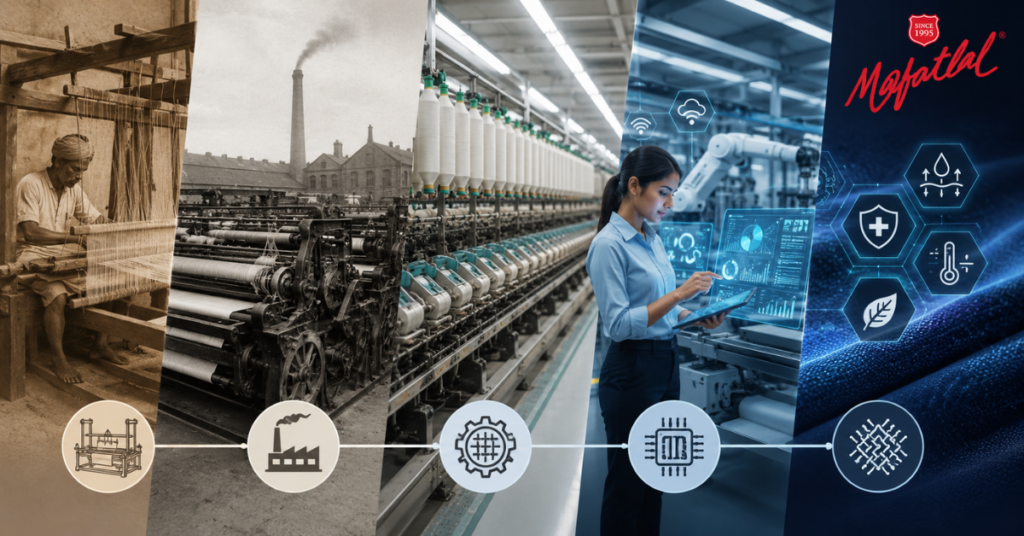
The story of the evolution of Indian textile mills is a remarkable journey of resilience, innovation, and industrial transformation. Over the last 150 years, India’s textile industry has evolved from colonial-era spinning mills powered by British machinery to technologically advanced smart factories serving global markets. Today, the textile sector remains one of the country’s largest industries, contributing significantly to employment, exports, and economic growth.
Understanding the evolution of Indian textile mills provides valuable insight into how India became a global textile powerhouse while preserving its rich manufacturing heritage.
The Early Days: The History of Textile Industry India
The history of textile industry India dates back centuries, long before industrialization. Indian textiles were renowned worldwide for their quality, craftsmanship, and intricate designs. However, the introduction of mechanized manufacturing during British rule transformed the sector significantly.
The establishment of textile mills in cities such as Mumbai and Ahmedabad marked the beginning of large-scale industrial production. This period laid the foundation for the modern textile ecosystem and became an important chapter in the history of textile industry India.
As industrialization expanded, the textile sector emerged as a major contributor to economic activity, shaping the future growth of manufacturing across the country.
The Rise of Indian Cotton Mills During the Colonial Era
The development of Indian cotton mills colonial era represented a significant milestone in the country’s industrial journey. British influence introduced mechanized spinning and weaving technologies, allowing mills to process cotton more efficiently than traditional handloom systems.
During the Indian cotton mills colonial era, textile production became concentrated in industrial hubs, particularly in western India. These mills helped establish India’s reputation as a major cotton textile producer while creating employment opportunities for thousands of workers.
Although the colonial period presented numerous economic challenges, the Indian cotton mills colonial era played a critical role in shaping the industry’s future infrastructure and manufacturing capabilities.
Ahmedabad: The Manchester of India
No discussion about the evolution of Indian textile mills is complete without highlighting the Ahmedabad textile mills legacy. Often referred to as the “Manchester of India,” Ahmedabad became one of the country’s most important textile centers.
The city’s growth was driven by its strong entrepreneurial culture, access to raw cotton, and expanding industrial base. The Ahmedabad textile mills legacy continues to influence the Indian textile sector today through its contributions to manufacturing excellence and business innovation.
Many iconic textile companies emerged from this region, helping establish the Ahmedabad textile mills legacy as a symbol of industrial success and textile leadership.
Among the companies that contributed to India’s textile growth story is Mafatlal Industries Limited, a name that has remained synonymous with quality and innovation for generations.
Indian Textile Industry Post-Independence Growth
Following independence, the country entered a new phase of industrial expansion. The Indian textile industry post-independence growth period was characterized by government support, infrastructure development, and increased domestic demand.
The Indian textile industry post-independence growth era witnessed significant investments in manufacturing capacity, technological upgrades, and workforce development. As the economy expanded, textile companies diversified their product portfolios and entered new markets.
This period also saw companies like Mafatlal Industries Limited strengthen their position by adapting to changing market dynamics while maintaining high-quality production standards.
The continued Indian textile industry post-independence growth helped transform India into one of the world’s leading textile-producing nations.
The Modernisation of Indian Textile Sector
In recent decades, the modernisation of Indian textile sector has accelerated through the adoption of automation, digital technologies, and advanced manufacturing systems. Smart factories now use data analytics, artificial intelligence, and automated machinery to improve efficiency and quality control.
The modernisation of Indian textile sector has enabled manufacturers to meet global standards while reducing production costs and improving sustainability. Companies are increasingly investing in innovative technologies to remain competitive in international markets.
As part of the ongoing modernisation of Indian textile sector, manufacturers are embracing environmentally responsible practices, digital supply chains, and smart production processes.
Industry leaders such as Mafatlal Industries Limited continue to adapt to these changes, demonstrating how heritage brands can successfully evolve in a technology-driven marketplace.
From Traditional Mills to Smart Factories
The transformation from steam-powered mills to digitally connected manufacturing facilities reflects the extraordinary evolution of Indian textile mills. What began as a colonial-era industry has become a sophisticated global sector powered by innovation and expertise.
Today’s smart factories are capable of producing high-quality textiles with greater speed, precision, and sustainability than ever before.
Conclusion
The evolution of Indian textile mills is a testament to India’s ability to adapt, innovate, and grow across generations. From the rich history of textile industry India and the influence of the Indian cotton mills colonial era to the enduring Ahmedabad textile mills legacy, every chapter has contributed to the industry’s success.
Driven by the Indian textile industry post-independence growth and the ongoing modernisation of Indian textile sector, India continues to strengthen its position as a global textile leader. Companies like Mafatlal Industries Limited exemplify this journey, bridging tradition and innovation while shaping the future of textile manufacturing.